Originally Posted: March 2026
Updated: April 2026
Gear Review: Xplore Setup for Backcountry Nordic Ski Touring
Rottefella Xplore Backcountry Off-Track Nordic Bindings
Fischer BCX Grand Tour XP Nordic Boots
Rossignol XP 85 Positrack Xplore Nordic Skis
Ski Touring Gear Evolution
During the 50+ years of my cross-country (XC) and backcountry (BC) ski touring career, I’ve owned many different types of boot/binding systems, and I’ve observed the steady evolution in both nordic and alpine touring gear. My first pair of nordic boots and bindings utilized what is best described as the Old Nordic Norm (ONN) system, which has also been known as a 75-mm or three-pin or duckbill system. Given its simplicity and low cost, this system stayed around for many decades—despite having (in my opinion) serious shortcomings. My first pair of alpine skis were mounted with Ramer bindings, which were cutting-edge at the time but relatively short-lived.
As the sports of XC nordic skiing, BC nordic ski touring, and BC alpine ski touring steadily diverged from each other over time, the gear became more specialized. For XC skiing, the proprietary New Nordic Norm (NNN) and Salomon Nordic System (SNS) boot/binding systems took over. Nowadays, the XC skiing market is completely dominated by the NNN system. Meanwhile, the BC nordic touring market expanded with introduction of the NNN-BC system and steady improvements to the ONN platform (such as adding spring-loaded cables and free-pivoting toe hinges). Simultaneously, BC alpine touring systems continued evolving until the Dynafit “tech” boot/binding system became wildly popular. Today, that market is dominated by the numerous variations of this original tech system.
Without a doubt, there have been vast developments in both branches of the BC ski touring world over the past 50 years. However, what has been so frustrating to those of us who are firmly invested in BC nordic touring is this undeniable fact: Our nordic gear options have gotten progressively heavier while BC alpine touring gear has gotten dramatically lighter!
In 2021, Rottefella offered a possible salve for our nordic frustration when they rolled out their innovative new Xplore boot/binding system. They borrowed the uber-popular BC alpine touring “tech” system and applied it to the world of BC nordic touring—but with an interesting twist. The current alpine tech system consists of two key components: (1) a binding with small pins mounted on spring-loaded arms, and (2) a boot with small dimples located near the toe. The pins mate with the dimples and keep the boot attached while allowing for a free-pivot motion. In contrast, Rottefella’s Xplore nordic system reverses this arrangement, such that spring-loaded pins are built into the boot toe, and dimples are located on the binding arms.
My Plunge Into the Xplore System
Upon first seeing the new Xplore system, I was fascinated but skeptical. To be sure, the idea of adopting a well-proven BC alpine touring system for BC nordic touring was clever and intriguing. It is simple, lightweight, and allows for low-resistance (or no-resistance) foot movement, thereby combining the best features of established nordic and alpine systems. However, I wondered whether it is adequately secure and durable. Current reviews are somewhat mixed; there simply hasn’t been enough time to do a long-term evaluation of the system.
After several years of contemplation, I bit the bullet and purchased an Xplore ski/binding/boot setup. From the limited options available at the time, I selected a pair of Rossignol XP 85 Positrack skis with pre-mounted Rottefella Xplore Backcountry Off-Track bindings, along with a pair of Fischer BCX Grand Tour XP boots. I also purchased a pair of Rottefella Free-Pivot Plates, which are sold as a binding accessory. I did not purchase the Rottefella Hard Flex Plates, but perhaps this is something I will buy in the future.
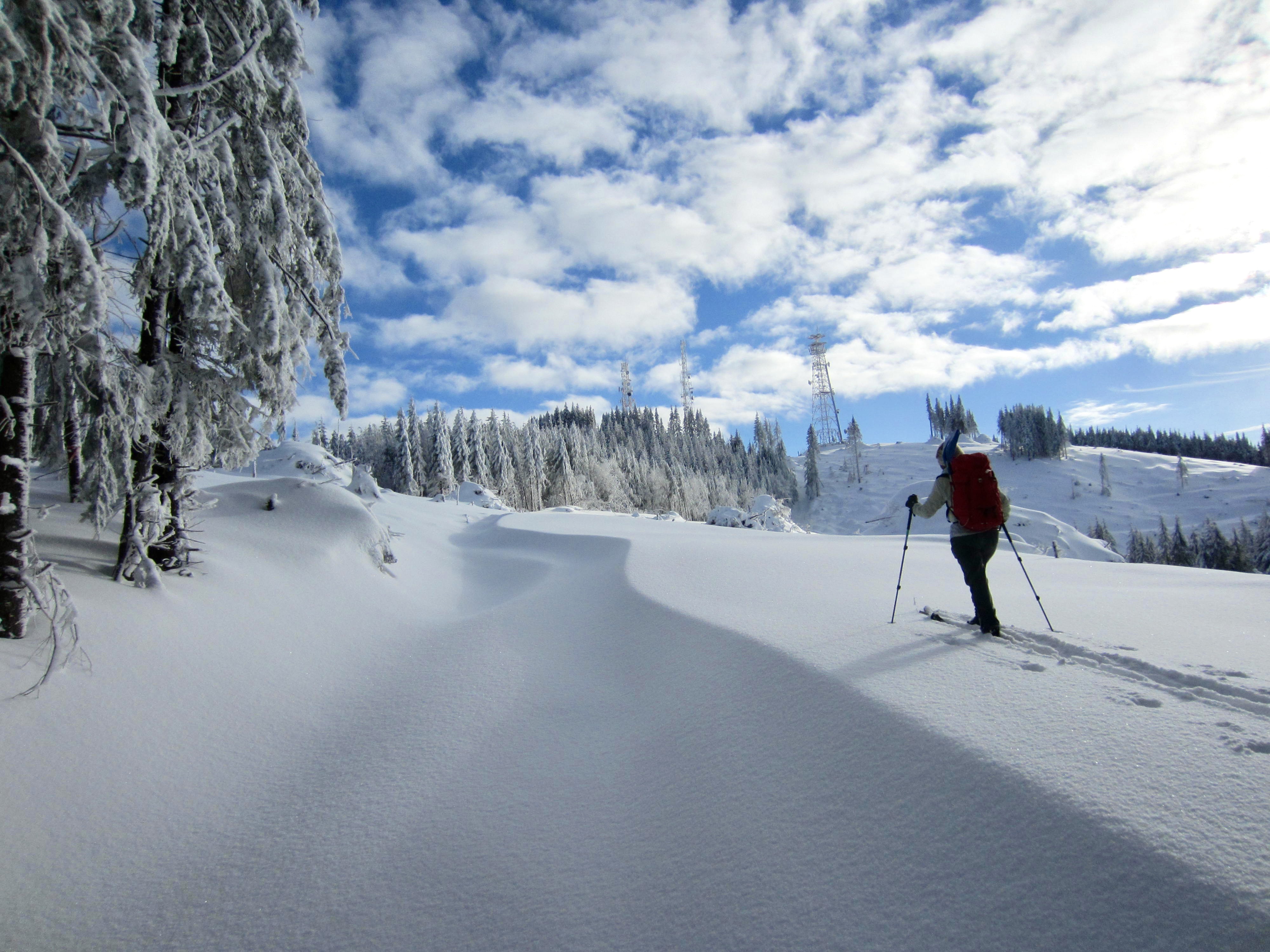
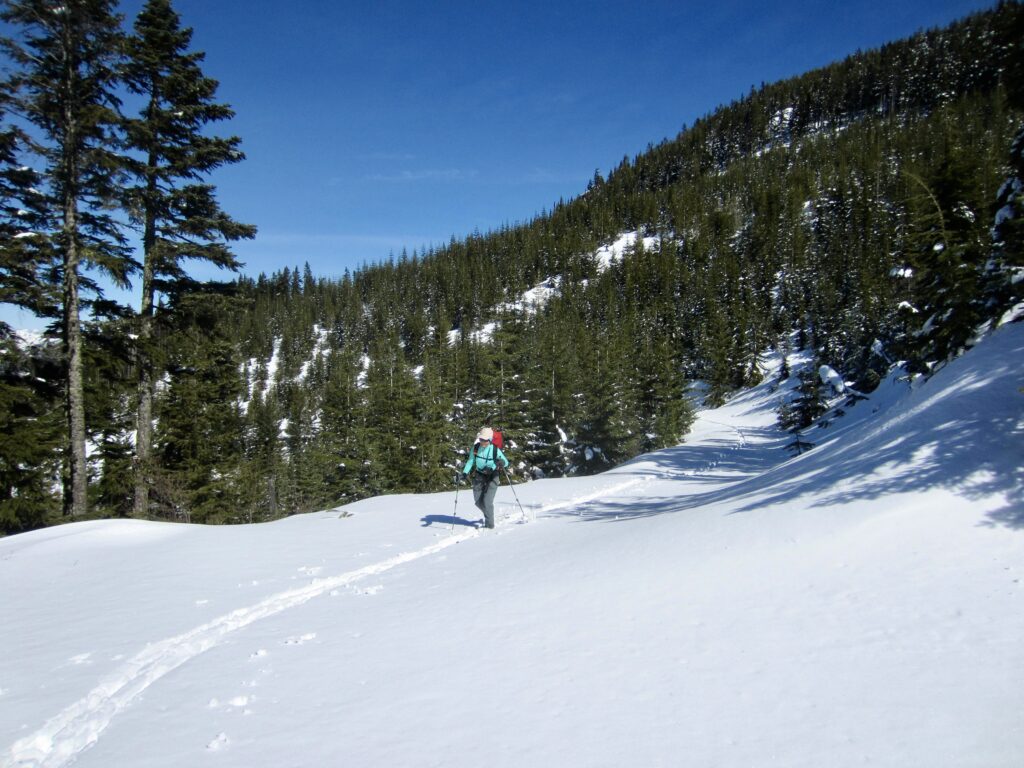
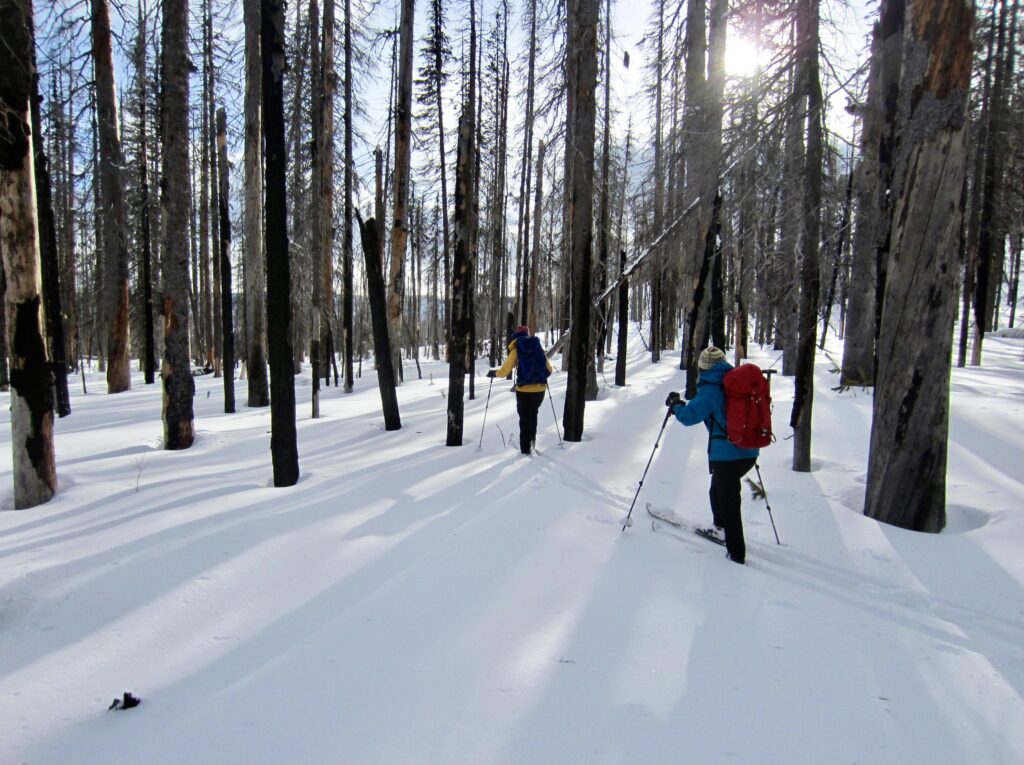
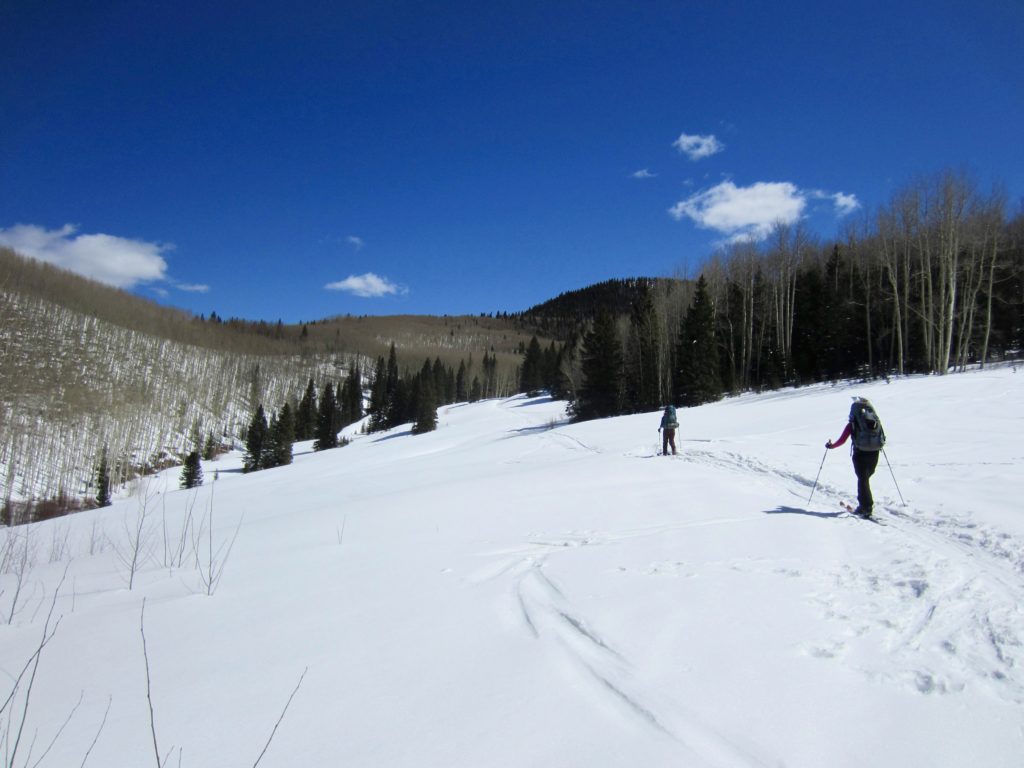
My planned use for the above-described setup was medium to long backcountry tours on snow-covered roads and through gentle forest terrain. It was intended to bridge the gap between my current lightweight XC/BC hybrid NNN-BC nordic touring setup and heavier BC 75-mm nordic touring setup. It was not intended to replace either of these setups, nor replace my current BC 75-mm telemark touring setup. Admittedly, my planned usage for the Xplore gear was pretty “soft,” but I was hesitant to commit to harder usage—say, a long tour into moderately steep terrain with a telemark descent—until I gained more familiarity and more confidence with it.
…
Affiliate Disclosure: My gear reviews may contain affiliate links, which means that if you purchase something that I’ve linked to, I might get a small commission at no additional cost to you. Be assured, though, that my reviews are unbiased and involve only gear that I (or a mountain partner) have used extensively. For all items, I discuss the cons as well as the pros.
<<< ————– >>>
Initial Impressions Regarding the Xplore System
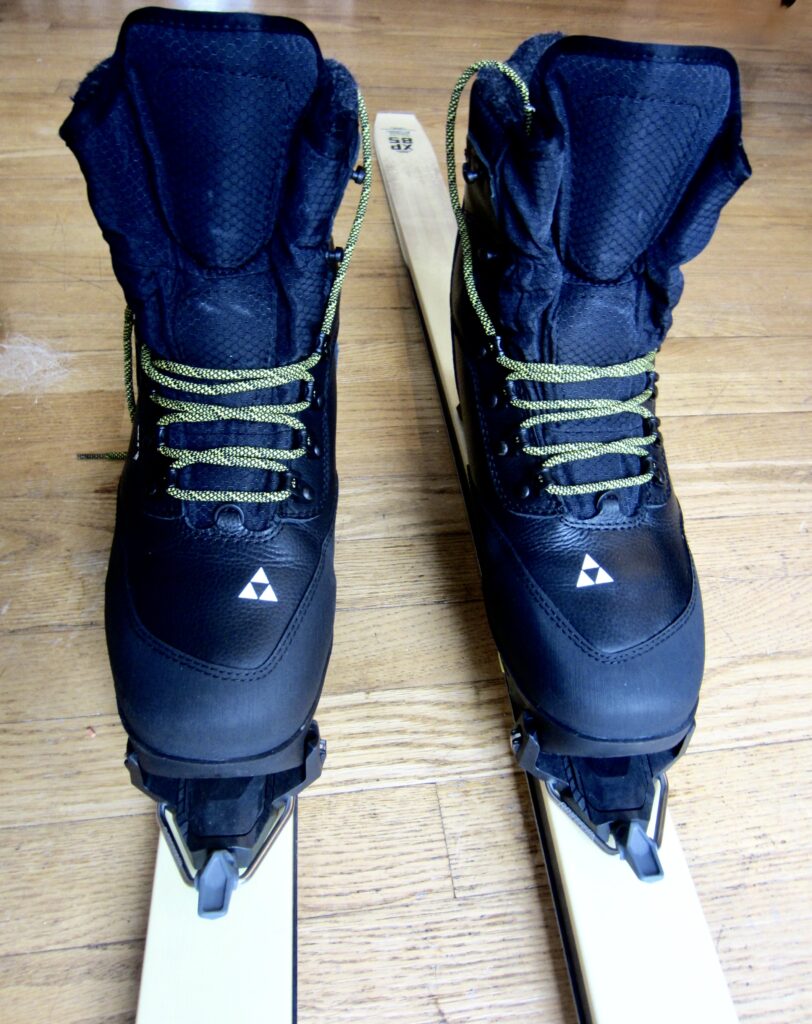
Even before its maiden voyage, I was impressed with the elegant simplicity of the Xplore boot/binding system. The binding is extremely lightweight, with few moving parts, and the boot-toe spring pins are very unobtrusive. When snapped together, the fit is nice and tight. Although the entire binding body is made of plastic, it appears to be a very strong plastic. Obviously, only extensive usage will demonstrate whether the material is strong enough for the rigors of backcountry ski touring.
Like an NNN-BC binding but unlike a 75-mm binding, the Xplore binding is laterally symmetrical; there is no left binding and right binding. As such, either boot will fit in either binding. This might seem like an unimportant feature if you’ve never experienced the hassle of identifying which of your 75-mm bindings is the left and which is the right when they are buried in powder snow.
.
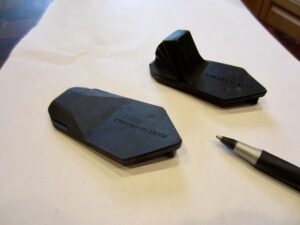
All Xplore Backcountry Off-Track bindings are sold with Standard Flex Plates, whereas Free Pivot Plates and Hard Flex Plates are available as accessories. The Standard Flex Plate has a little rubber toe bumper that provides a progressive increase in forward foot resistance—similar to a conventional NNN or SNS binding. The Free Pivot Plate has no rubber bumper, so there is no resistance to forward foot motion—much like an alpine tech binding. The Hard Flex Plates are designed to provide increased resistance—more like a telemark binding. In concept, these various plates could be swapped back and forth during a ski tour to accommodate varying conditions. In reality, removing a plate is not that easy; you need to push in a tiny button and then pry out the plate with a fingernail. With cold fingers, this would be a frustratingly delicate operation.
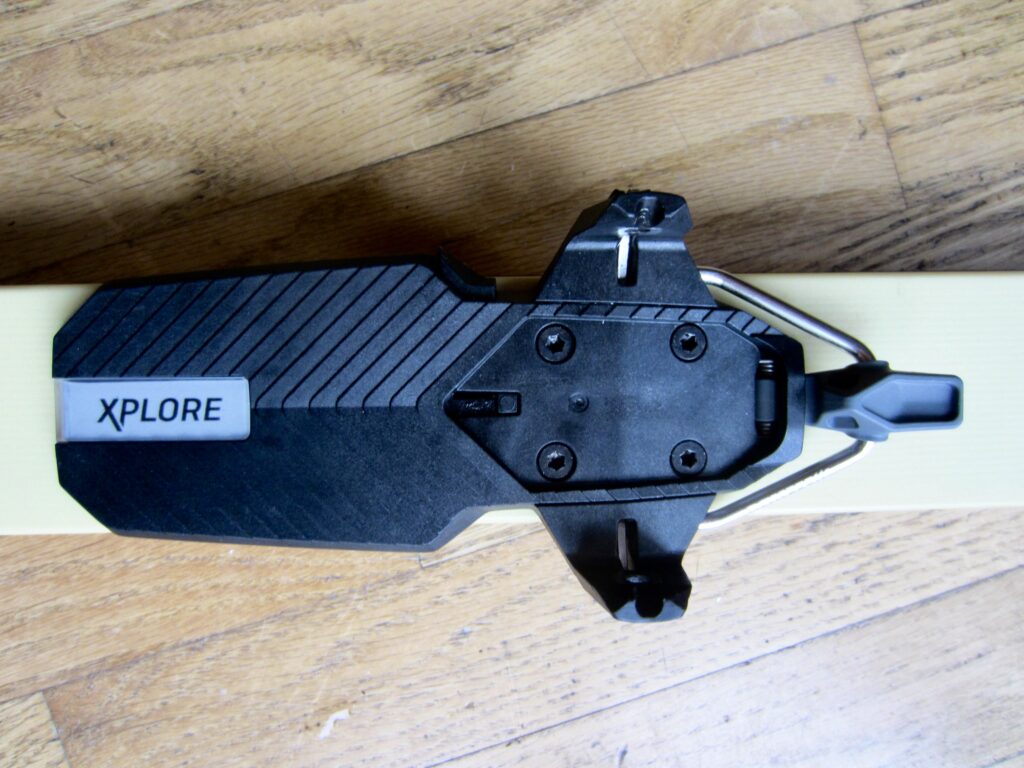
I was particularly interested in seeing how the binding is attached to the ski. Having ripped my NNN-BC bindings off my Spider 62 skis several times over the past ten years, I hoped that Xplore would improve on the NNN-BC three-hole mounting pattern. Happily, Xplore uses a four-hole mounting pattern, which should certainly improve the security. However, I also observed that the lateral spacing of these four holes is only 25 mm—identical to the NNN-BC binding. Considering that Rottefella recommends using skis with a minimum waist width of 68 mm, the binding could have utilized a larger, more secure hole spacing. This was a missed opportunity, in my opinion, but on a positive note, it does make the binding suitable for a much narrower ski. (More on this subject in the Xplore Binding/Ski Compatibility Comments below.)
.
Gear Review Summaries
Rottefella Xplore Binding Pros & Cons
Pros:
- Very simple and lightweight, with few moving parts.
- Four-hole mounting pattern improves security over three-hole pattern.
- Step-in & push-out convenience.
- Symmetrical design accommodates either left or right boot.
- Less prone to snow clogging than NNN-BC bindings.
- Three available flex plates allow different resistance levels.
- Built-in heel lifter eases strain during steep ascents.
Cons:
- Long-term durability of plastic body is unproven.
- Narrow mounting pattern limits security under lateral torque.
- Step-in operation requires very careful boot placement.
- Possibly more prone to snow clogging than some 75-mm bindings.
- Flex plates are difficult to remove and swap out.
Bottom Line: An innovative use of proven alpine tech binding design that provides low-resistance (or even no-resistance) touring efficiency for a wide variety of terrain, ranging from groomed trails to moderately steep backcountry slopes.
Product Link: Rottefella Xplore Backcountry Off-Track bindings
Fischer BCX Grand Tour XP Boot Pros & Cons
Pros:
- All-leather upper is very water resistant and appears to be very durable.
- Adequate stiffness and support for gentle to moderate terrain.
- Well-insulated for cold-weather touring.
- Well-made lacing rings and hooks.
- Xplore sole provides good traction and shape for walking.
Cons:
- Upper is probably too heavy and stiff for efficient low-angle touring.
- Lack of instep hooks allows some heel lift when striding.
Bottom Line: A solidly made midweight boot that seems ideal for touring on ungroomed roads and gentle to moderate forest slopes.
Product Link: Fischer BCX Grand Tour XP ski boots
Similar Products:
>>> Rossignol XP 5 ski boots (a lightweight boot well-suited to skiing on groomed trails and forest roads.)
>>> Alpina Pioneer Light XP ski boots (a lightweight boot well-suited to skiing on groomed trails and forest roads.)
>>> Rossignol XP 12 ski boots (a midweight boot similar in function to BCX Grand Tour XP.)
>>> Alpina Alaska XP ski boots (a midweight boot similar in function to BCX Grand Tour XP.)
Rossignol XP 85 Positrack Ski Pros & Cons
Pros:
- Lightweight design meshes nicely with Xplore binding.
- Fishscale base provides good traction on low-angle terrain while maintaining good glide.
- Slots accommodate proprietary full-length and kicker-length skins.
Cons:
- Low-rise tip not ideal for breaking trail in soft snow conditions.
- Proprietary skins have not been readily available.
Bottom Line: A versatile medium-width ski that is ideally suited to touring on ungroomed roads and gentle to moderate forest slopes in a variety of conditions ranging from hard-packed snow to soft powder.
Product Link: Rossignol XP 85 Positrack skis
Similar Products:
>>> Fischer Traverse 78 Crown/Skin skis (a narrower ski that is better suited to ungroomed roads and gentle to moderate forest slopes in firm snow.)
>>> Fischer Excursion 88 Crown/Skin skis (a slightly wider ski that appears to serve a similar function.)
>>> Fischer S-Bound 98 Crown/Skin Xtralite skis (a wider ski that is better suited to ungroomed roads and gentle to moderate forest slopes in deep powder snow.)
Preliminary Review Comments
My first several days of skiing on the new Xplore setup occurred soon after a snowstorm dropped 3 feet of fresh snow in the Cascades. This gave me a good opportunity to test the system’s trail-breaking performance and ease of use in both fluffy powder and heavy wet snow. Subsequent tours involved springtime corn snow ranging from morning ice to afternoon slush. Thus far, I’ve racked up seven days of touring on my new setup in a wide variety of snow conditions, and I’m becoming an Xplore convert! Because the following comments are based on this somewhat limited use, they constitute only a preliminary review. I will present additional comments next year, after many more days of use.
Rottefella Xplore Backcountry Binding Review
I immediately discovered that stepping into the binding requires carefully aligning the boot pins with the binding dimples. After a little practice, this became remarkably easy when standing on firm snow. This became a tricky operation when snow was partially obscuring the pins or dimples, and it often took me several attempts in order to lock in. To be fair, though, alpine touring skiers with tech systems have fully accepted this task, and I will undoubtedly improve with continued practice. Getting out of the binding merely involves a firm push on the release tab, using either a thumb or ski pole. I was also pleased to find that the Xplore system seems less prone to snow-clogging than the NNN-BC system, but it might not prove to be as clog-free as my 75-mm Voile Switchback bindings.
During one of my ski tours, I needed to break trail through 15 inches of very soft but very heavy wet snow. This involved repeatedly pulling my feet upward to get my skis out of the mire, thereby putting a considerable upward force on the pin-and-dimple connection. Not once did the pins slip out of the dimples, so they passed a harsh test. My confidence in the whole system took a big step up.
In order to compare the Standard Flex Plates and Free Pivot Plates, I changed plates at the midpoint of my first tour. I found that the Standard Flex Plates closely match the progressive resistance of my NNN-BC bindings, thereby providing a very predictable and familiar feeling. Progressive resistance is particularly desirable for controlling your ski tails, such as when zigzagging up a steep hill or stepping over obstacles. In contrast, the Free Pivot Plates allow unrestricted forward foot motion—much like my Switchback bindings—which is especially advantageous for long tours or when breaking trail in soft snow. If you are new to resistance-free ski touring, it can feel very strange at first, but you won’t take long to appreciate the great efficiency. I will likely use the Free Pivot Plates for the most of my ski tours, while saving the Standard Flex Plates for convoluted forest tours and long descents.
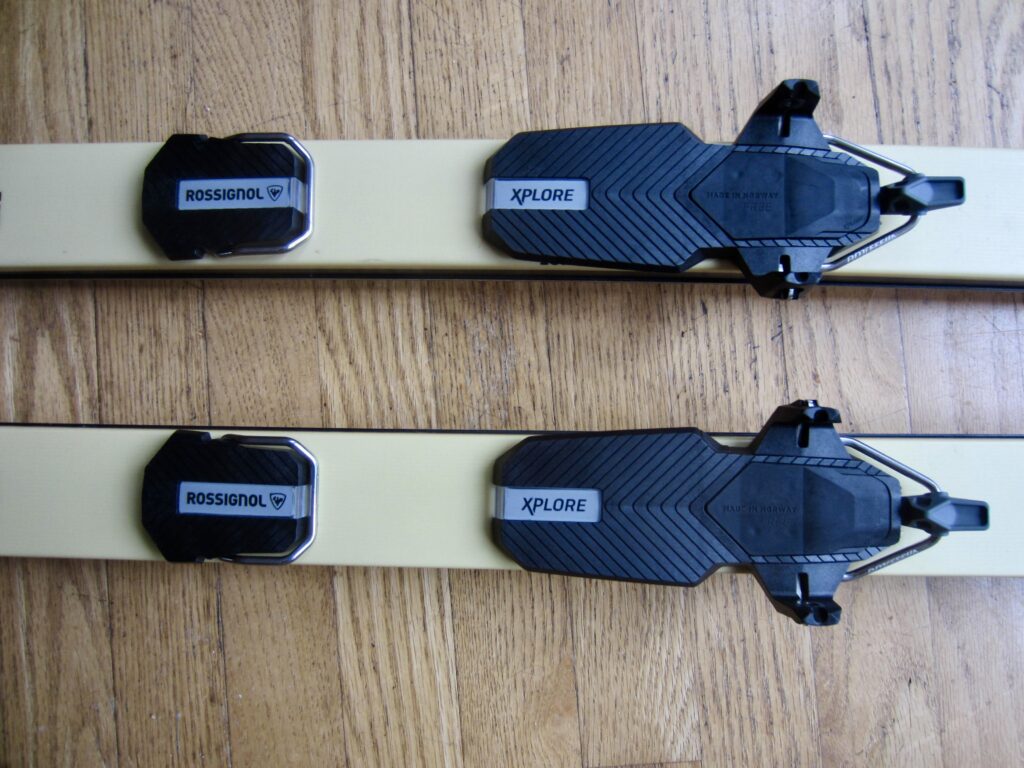
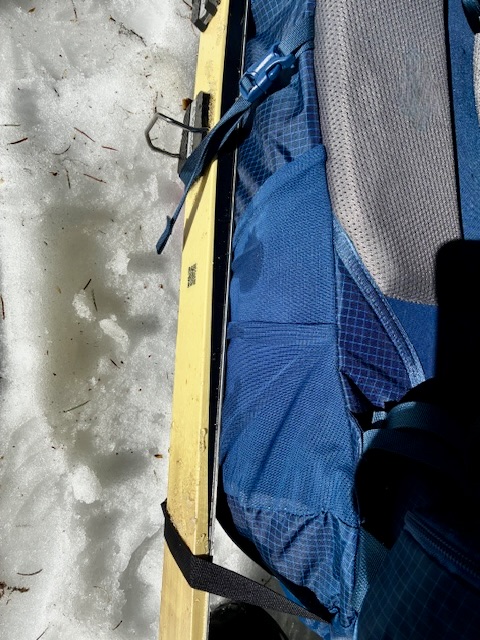
The binding’s heel pieces are equipped with heel lifters, or climbing bars, which are designed to reduce strain on ankles and calves when ascending a fairly steep slope. When not being used, they fold down snugly and maintain a low profile. I will mention, however, that this low profile makes the bars difficult to raise when wearing gloves or mittens. Anyway, an additional benefit of these bars is that they provide a “strap stop” when strapping your skis onto your backpack (see photo below).
.
.
Fischer BCX Grand Tour XP Boot Review
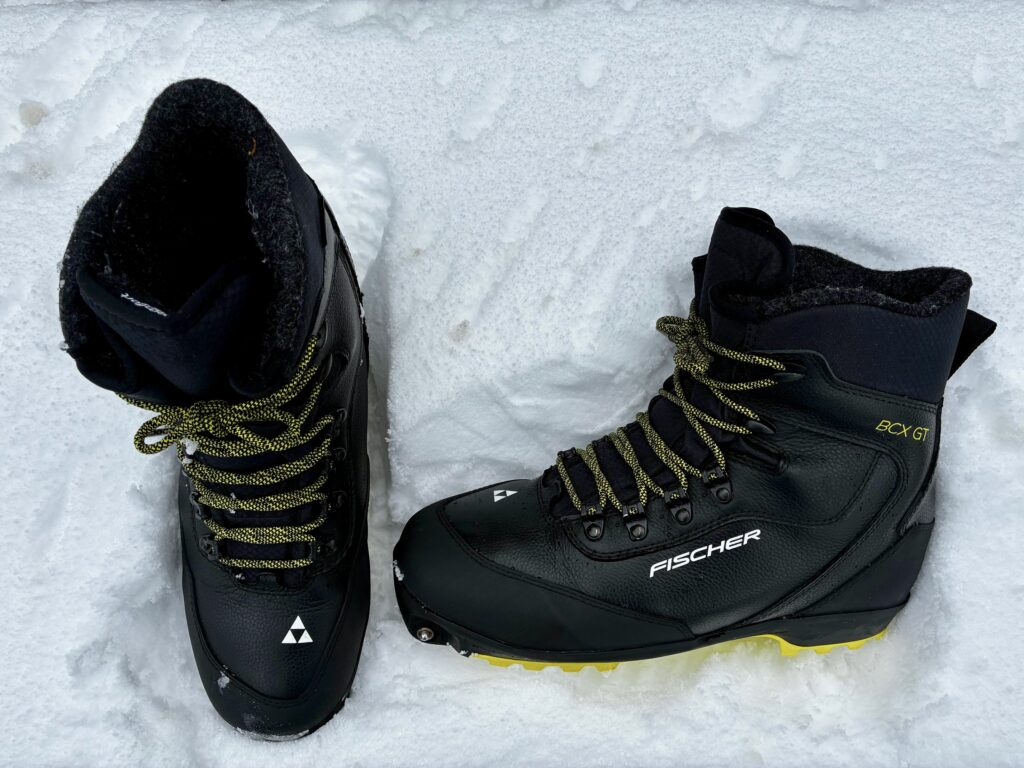
Based on my positive experience with a pair of Fischer’s Transnordic 75-mm boots, I purchased a pair of their BCX Grand Tour XP boots. These Xplore-compatible boots have a nice all-leather upper, just like the Transnordic, but are cut several inches lower. They are very well-insulated and were comfortable right out of the box. A 4-hour tour in wet snow on a rainy day demonstrated that they are very resistant to water intrusion.
A feature that I greatly appreciate on these boots is the sturdy metal lacing hooks. Many boots use thin metal hooks that are prone to bending, but these appear to be resistant to such bending. One surprising deficiency, though, is the lack of instep hooks, which help to pull one’s foot into the heel pocket. As a result, I did notice a bit of heel lift on every stride, but I was able to mitigate this issue by wearing thicker socks.
The boots have a nicely lugged sole to provide traction when hiking up a snow slope. I particularly like the fact that the Xplore sole is pretty much flush with the upper on all sides; this makes the boot feel less awkward than the “duckbill” sole found a 75-mm boot. Furthermore, the small spring-loaded pins on each side of the toe seem to be less vulnerable to damage than the hinge bar on the front of an NNN-BC boot.
.
Rossignol XP 85 Positrack Ski Review
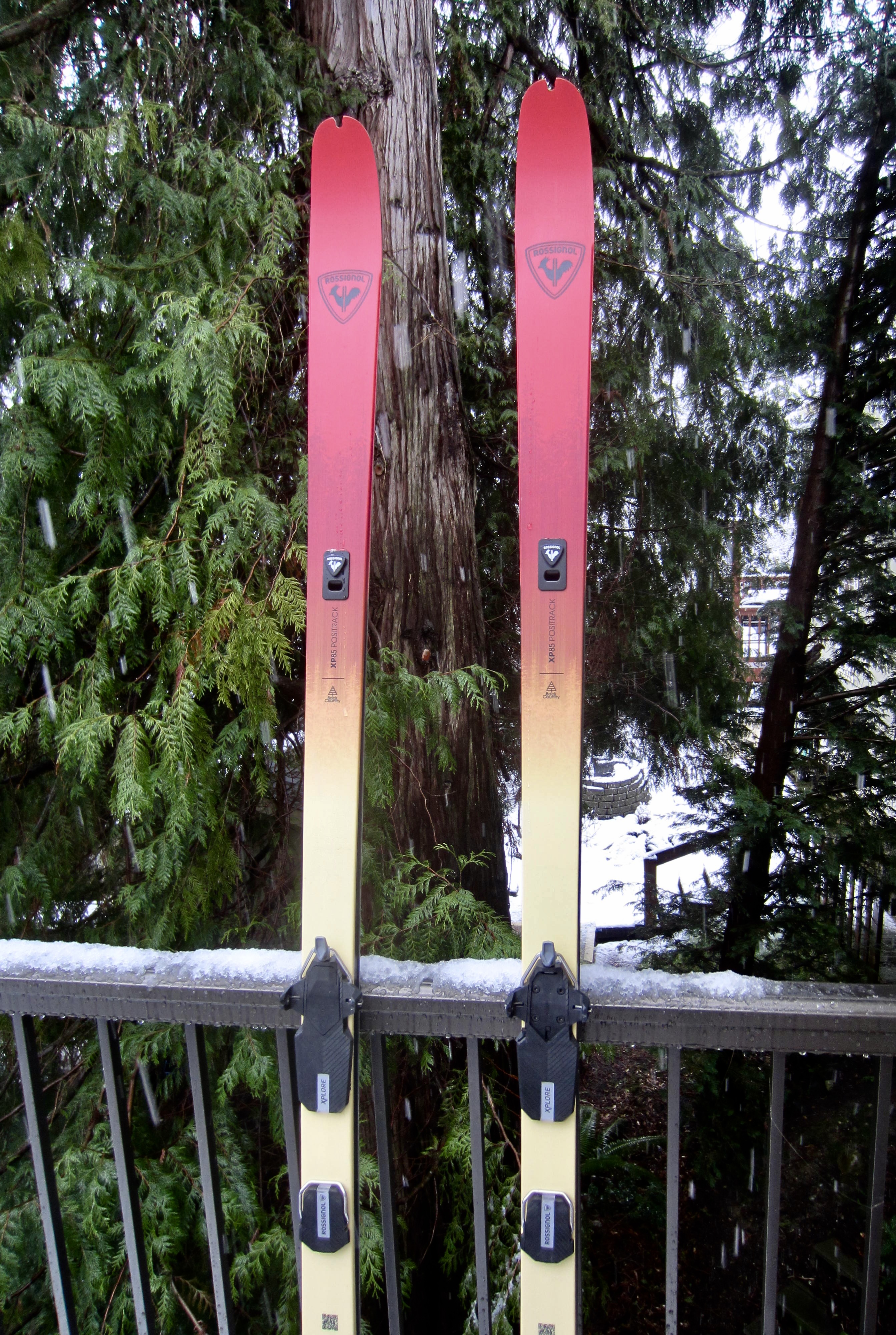
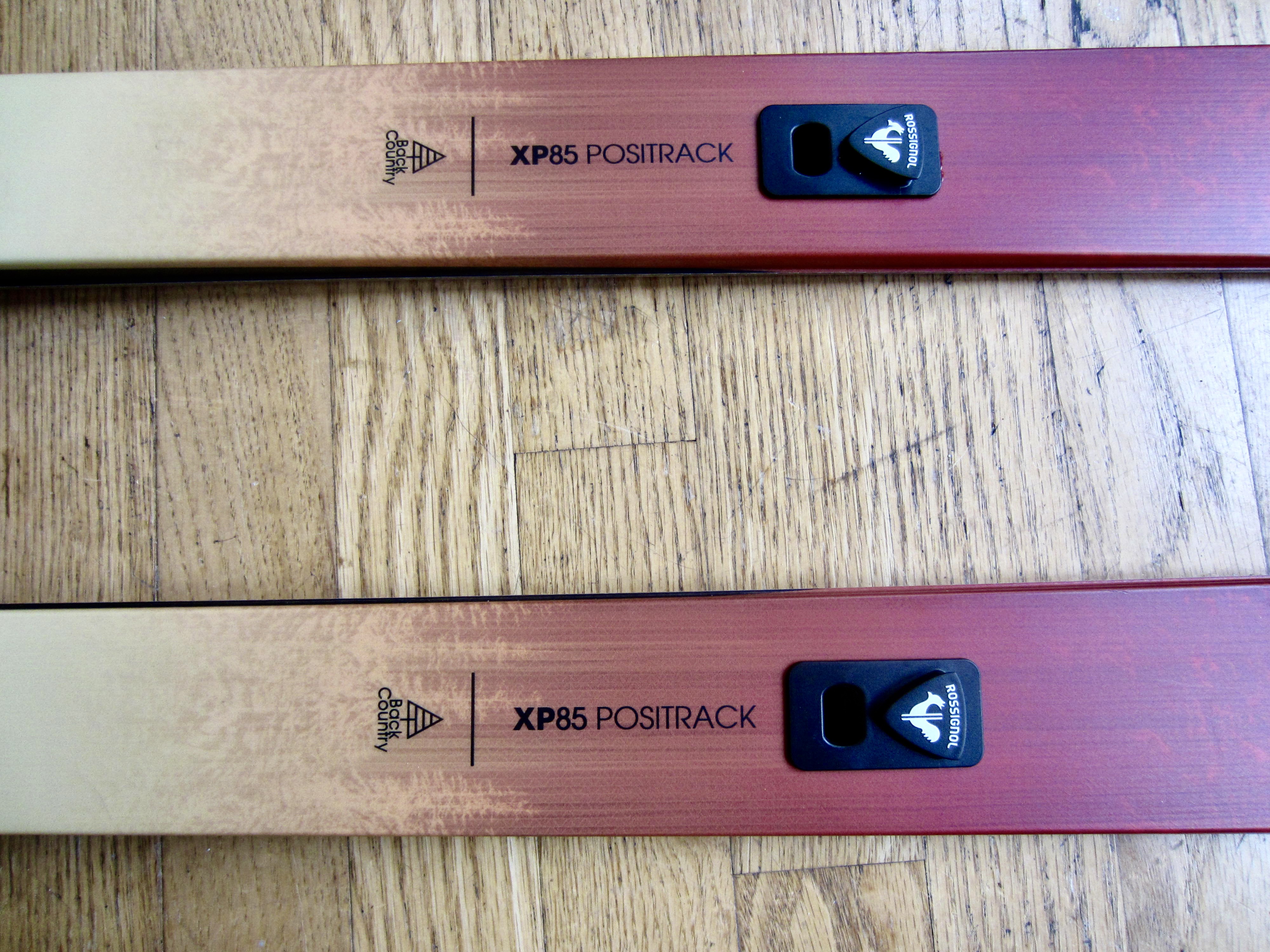
Because my Rossignol XP 85 Positrack skis came pre-mounted with Xplore bindings, someone in the sales department obviously thought that they were compatible items, and I can’t disagree. The skis have a lightweight feel in kick-and-glide mode, which meshes well with the lightweight bindings. The moderate width (85-61-75) seems optimal for a variety of conditions, ranging from firm corn snow to soft powder, and the sidecut tracks straight enough for road touring but should offer some downhill turning capability. Interestingly, the 61-mm waist is narrower than Rottefella’s recommended minimum of 68 mm, but there’s no apparent problem here. (More on this subject in the Xplore Binding/Ski Compatibility Comments below.)
The long-proven Positrack fishscale base provides good traction on flat or gently inclined terrain while giving ample glide. For steeper terrain, the skis are equipped with slots to accommodate proprietary partial-length kicker skins and full-length climbing skins. Considering that my intended use is on forest roads and gentle forest slopes, I plan to buy a pair of kicker skins if and when they become available next season (they have been scarce this season, in contrast to Fischer’s readily available Easy Skin). The skis also have full-length metal edges, which I regard as essential for all-conditions backcountry use.
One of my peeves regarding many current backcountry skis—including the Rossignol XP 85—is the annoying trend toward “low-rise tips.” This design is fine when skiing on groomed snow, but when breaking trail through deep snow, I want “high-rise tips” that help to keep the skis from diving under the snow surface. The extra curvature also prevents a tip strap from slipping off when carrying the skis in an A-frame configuration on a backpack.
.
Xplore Binding/Ski Compatibility Comments
As previously mentioned, the Xplore binding uses a four-hole mounting pattern, with a lateral spacing of only 25 mm—identical to the spacing of an NNN-BC binding. This hole spacing dictates, to a great extent, the minimum waist width of a compatible ski, because we obviously don’t want the binding screws to be too close to the ski’s sidewalls. If we establish a minimum sidewall clearance of, say, ½ inch or 12.5 mm, then the minimum acceptable ski waist width would be (25 mm)+(2×12.5 mm)=50 mm.
However, another factor is the width of the binding’s base plate. For best performance and security when applying a large lateral torque on the binding—such as when traversing across an icy slope or carving a turn on hard-packed snow—we would want the entire base plate to rest on the ski’s top sheet. Considering that the Xplore binding’s base plate is about 60 mm wide, this would also be the ski’s minimum waist width for that application.
Given the aforementioned factors, I have personally come to the following conclusions. You might have differing opinions, but at least you can see my thought process.
- For a ski touring setup that will be used primarily on forest roads and relatively gentle hillslopes, the ski should have a waist width of at least 50 mm. This would allow Xplore bindings to be mounted on popular XC/BC hybrid skis such as the Fischer Spider 62, Rossignol BC 65 Positrack, and Salomon Escape Outside 65.
- For a ski touring setup that will be used in steeper and more-demanding terrain, including telemark descents, the ski should have a waist width of at least 60 mm. This would allow Xplore bindings to be mounted on popular BC touring skis such as the Fischer Excursion 88, Salomon Escape Outback 83, Madshus Panorama, and Rossignol BC 80 Positrack.
This leads me to wonder why Rottefella (or someone else) arrived at their recommendation for a minimum waist width of 68 mm. Perhaps it was an overly conservative standard based on some other factor? Regardless, the fact that Rossignol sells an XP 85 ski with a 61-mm waist and a pre-mounted Xplore binding is a pretty good argument against such a recommendation.
…
<<< ————– >>>
Return to Gear Reviews homepage
Return to Gear Reviews, Packing Lists & Trailcat Tips homepage